Geoffrey Hinton
b. 1947 • Age 79
United Kingdom
About
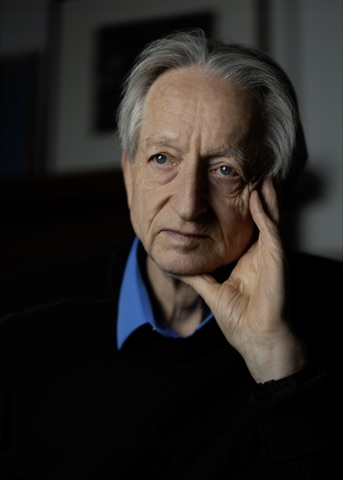
Geoffrey Hinton is a British-born cognitive psychologist and neural network researcher who laid the theoretical foundations of modern artificial intelligence. In 1986, he, David Rumelhart, and Ronald Williams refined and published the backpropagation algorithm, demonstrating that multilayer neural networks could learn complex patterns. This algorithm is now the foundation of nearly all deep learning models worldwide.
From the 1980s through the early 2000s, when many scholars were skeptical of neural networks, Hinton steadfastly advanced neural network theory. In 2006, he developed Deep Belief Networks, sparking the deep learning renaissance—a seminal paper proving that deep neural networks could be trained efficiently. In 2018, he shared the Turing Award with Yann LeCun and Yoshua Bengio for "conceptual and engineering breakthroughs that have made deep neural networks a critical component of computing." In 2024, at age 88, he received the Nobel Prize in Physics for contributions to foundational AI theory, achieving science's highest honor.
Hinton built most of his career at the University of Toronto in Canada, where he trained numerous students now serving as key researchers at leading AI companies including OpenAI, Google, and Meta. His philosophy rests on being "inspired by biology, but verified by rigorous mathematics," bridging cognitive science and machine learning.
Anecdotes
Hinton's interest in brains and cognition was shaped by his psychologist mother. From childhood, he demonstrated deep interest in neuroscience and mathematics, naturally leading him to neural network research at their intersection. He often said he wanted to "help physicists and biologists talk to each other," capturing the essence of his work.
The 1986 backpropagation paper revolutionized the neural network community. Yet over the following decade, neural networks entered an "AI winter." While many researchers abandoned the field, Hinton continued developing neural networks with unwavering faith. When his Deep Belief Networks paper appeared in 2006, the scientific world refocused on neural networks. This exemplifies how scientific conviction and persistence can reshape an entire field.
Upon receiving the 2024 Nobel Prize in Physics, Hinton acknowledged that AI's development exceeded humanity's expectations while emphasizing responsible development. He stated, "Scientific pride and the responsibility to warn coexist," demonstrating that he values ethics and safety as much as technological progress.
Achievements
- 1986Advanced and published the backpropagation algorithm
- 2006Developed Deep Belief Networks, initiating the deep learning renaissance
- 2018Received Turing Award with Yann LeCun and Yoshua Bengio
- 2024Awarded Nobel Prize in Physics for foundational AI theory contributions
Books
- Artificial Neural Networks (1992)