Robert C. Martin
b. 1952 • Age 74
United States
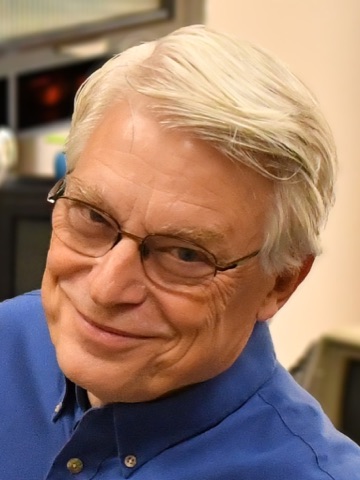
About
Robert C. Martin, known affectionately as "Uncle Bob," is an American software engineer and author who has shaped professional programming standards for over three decades. Born in 1952, Martin began his career as a self-taught programmer at seventeen and has spent his career systematizing the principles and practices of software design.
In 1991, Martin founded Object Mentor, an organization dedicated to training companies in Extreme Programming and Agile methodologies. A decade later, in 2001, he became one of seventeen signatories of the Agile Manifesto, contributing to its central thesis: valuing individuals and interactions over processes, working software over documentation, and responding to change over following a plan.
Martin's most profound influence came with the 2009 publication of Clean Code, a book premised on a deceptively simple yet profound observation: "Code is read far more often than it is written." The book distilled decades of practical wisdom into principles and practices that became standard across the industry. His SOLID principles—Single Responsibility, Open/Closed, Liskov Substitution, Interface Segregation, and Dependency Inversion—became pillars of object-oriented design.
Anecdotes
Uncle Bob is known for his uncompromising standards. His "good code" examples became benchmarks for the industry, while his "bad code" illustrations became anti-patterns that programmers learned to recognize and avoid. His name on a piece of code is an endorsement; his criticism is taken seriously.
Martin's conference talks are legendary. Rather than data-heavy presentations, he engages audiences with stories and philosophical inquiry, leaving them to wrestle with fundamental questions: "What is code?" "What is a programmer's responsibility?" These talks often become pivotal moments in attendees' careers.
Early in his career, Martin was an unequivocal advocate of object-oriented programming. As functional programming gained traction, he demonstrated intellectual honesty by acknowledging that both paradigms have merit. This flexibility—refusing to be dogmatic—exemplifies his pragmatism; he is a practitioner of wisdom, not a preacher of doctrine.
Achievements
- 1991Founded Object Mentor for Extreme Programming training
- 2001Co-authored and signed the Agile Manifesto
- 2009Published Clean Code, a seminal work on code quality
- 2017Published Clean Architecture, addressing system-level design
Books
- Clean Code: A Handbook of Agile Software Craftsmanship (2009)
- The Clean Coder: A Code of Conduct for Professional Programmers (2011)
- Clean Architecture: A Craftsman's Guide to Software Structure and Design (2017)
- Clean Agile: Back to Basics (2019)